Werewolf (party deduction game)
The Rules of WerewolfWerewolf (party deduction game) is a magical party game introduced by Pansy Parkinson at Theodore Nott’s birthday gathering at Nott Manor. Its hidden roles, staged danger, and timed darkness create a contest of deduction, but the game’s significance extends beyond identifying the werewolf: Draco Malfoy uses its cover and constraints to pursue Hermione Granger, making the rules a second arena for their flirtation.
Design and Setting
Pansy presents the game as a simple group challenge: everyone receives a role, and the players must identify the werewolf among them. She moderates, distributes the role slips, and warns the players to memorize what they have been given before the papers are destroyed by magic. The game’s structure depends on concealed information and a shared performance of uncertainty; each participant knows their own role, but must interpret the others’ conduct without knowing what they are hiding.
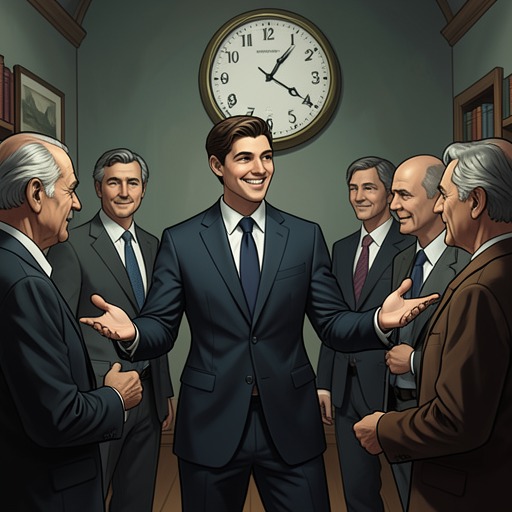
The gathering is a birthday party, not a formal game night, and its mixture of friends and former rivals shapes the atmosphere. Draco, Blaise Zabini, Theodore Nott, Ginny Weasley, Hermione, and Neville Longbottom form the playing circle. Harry Potter and Ron Weasley remain apart, occupied with chess, while Adrian and Daphne Greengrass observe from a distance unlikely to let them see or hear the game. That separation gives the players a relatively private stage without removing them from the wider party.
Hermione objects to the premise because it casts a werewolf as inherently violent and feared. Pansy dismisses the objection as misplaced seriousness about a party game and continues setting up the round. The disagreement establishes a contrast between Hermione’s attention to what a game represents and Pansy’s interest in keeping play moving. It also gives the game a pointed tension: its fictional threat borrows the language of a real prejudice, even as the players are meant to treat it as harmless entertainment.
Roles, Rounds, and Victory Conditions
Pansy assigns one werewolf, one healer, and villagers to the remaining players. At each Full moon, the werewolf tells the moderator whom they want to kill. The werewolf is also permitted to use legilimency for the purposes of the game, a special magical privilege built into the role. The healer can name a player to save during the same phase, but the healer’s voice is altered so that the group cannot identify the person making the choice.
The moderator uses a jinx to close everyone’s eyes during the Full moon. Pansy explains that the spell prevents cheating more reliably than simply asking the players to keep their eyes shut. Once the night phase is over, the group guesses who the werewolf is. A player who is killed must leave the game, and the players have three incorrect guesses before the werewolf wins by surviving the completed Full moon phases. These rules combine elimination, limited chances, and concealed actions: the group must make its deductions while knowing that its opportunities to accuse are finite.
Draco’s slip identifies him as a villager. The role gives him no stated authority to make the werewolf’s choices, and he initially regards it as an unpromising assignment. His attention, however, is fixed less on solving the puzzle than on Hermione. Even before the first night phase, he watches her in the circle and looks for a way to get her alone. The assignment of roles therefore creates dramatic irony: the reader knows that Draco is not the werewolf, while his private pursuit of Hermione becomes an unofficial game operating alongside Pansy’s.
Darkness and Rule-Bending
The jinxed night phases are the game’s defining theatrical device. With sight denied, a whisper or touch becomes difficult to locate and easy to misread. When Pansy announces the first Full moon, she startles Hermione by whispering close to her ear, then laughs at her reaction. Hermione senses another presence nearby and, despite knowing the jinx prevents her from opening her eyes, tries to see who is there. The game’s enforced darkness thus creates both uncertainty about the hidden player and a bodily suspense that its formal rules do not account for.
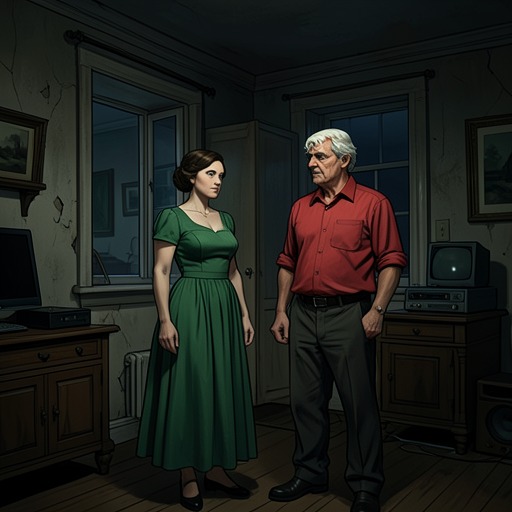
Later, during another darkened phase, Hermione waits for the presence to return. A finger passes over her thumb and into her palm, and someone stands firmly against her back. Draco whispers her first name and presses the encounter into flirtation: he asks whether the rules forbid touching, kissing, or taking her upstairs. Hermione answers that she does not always follow the rules; Draco replies in kind and traces a finger down her spine. The scene turns the game’s anonymity into cover for a private exchange, while their whispered words make clear that both understand the encounter as something more than deduction.
The rule that grants legilimency to the werewolf makes the boundary between permitted play and opportunistic magic especially charged. During the final Full moon, Draco uses a Notice Me Not charm and reads Hermione’s mind, then asks what she wants before their limited time is over. The rules authorize legilimency for the werewolf’s game purpose, but Draco’s known villager role makes his use of magic part of the flirtation rather than a straightforward move in the contest. The distinction matters: the game supplies a rationale for closed eyes and hidden action, while Draco’s private agenda bends that rationale toward intimacy.
Public Play and Narrative Function
The game’s visible guesses continue to offer cover for the players’ unspoken tensions. At one point, Draco teases Hermione that she might be saving him for last because she enjoys tormenting him. Hermione fidgets with her wand and hair instead of giving him a direct answer, while Neville remarks that the accusation sounds plausible. The suspicion is playful rather than a reliable account of the game’s evidence, but it lets Draco turn an accusation into a challenge directed at Hermione.
When the group’s guesses fail to identify Hermione as the werewolf, Pansy announces the final Full moon. Afterward, Hermione says she no longer cares about the game. Draco takes over the public discussion, accuses Ginny of being the werewolf, and suggests that some couples need extra courage before asking Hermione whether she wants to meet him in a broom closet. His remark singles out Neville and Pansy as well as Ginny and Blaise, folding the party’s romantic subplots into the game’s closing banter. Hermione, embarrassed and angry at being publicly provoked after his private advances, storms away. The account does not establish who ultimately wins the game; its narrative payoff lies instead in how play exposes and intensifies personal dynamics.
As a story device, Werewolf (party deduction game) makes rules matter in two different ways. Pansy’s framework defines roles, turn-taking, and victory, while Draco treats darkness, magical concealment, and the game’s limited privacy as opportunities to test his connection with Hermione. The contrast between the group’s search for a hidden werewolf and the pair’s increasingly legible attraction gives the game its central irony: players try to discover who is pretending, even as Draco and Hermione use the performance of play to approach what they actually want.